Every job below is one we do ourselves across Germantown.
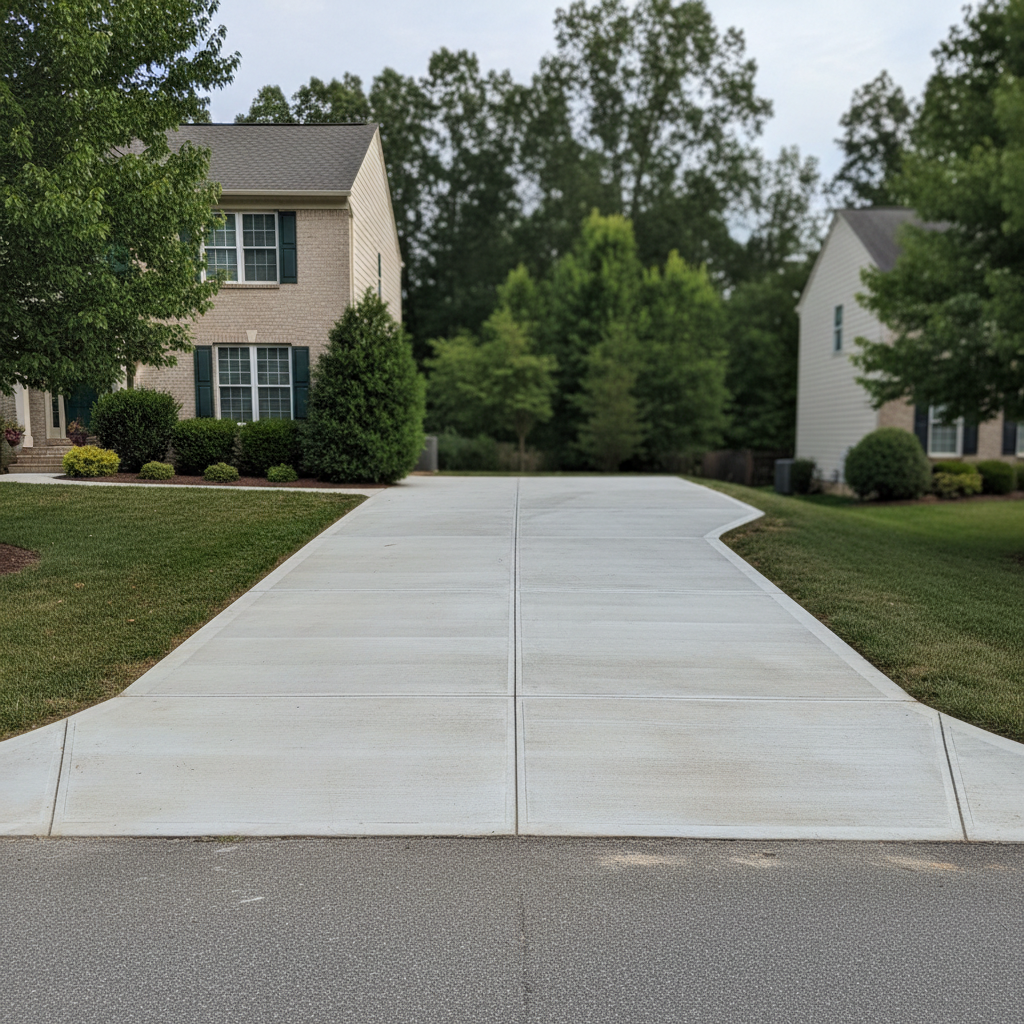
A driveway sees more weight and more freeze-thaw cycles than almost any other slab on the property, so the base work matters more here than anywhere else. Gravel gets compacted in lifts before forms go in, and rebar is set on chairs to keep it centered in the slab instead of sinking to the bottom during the pour. Most driveways are ready for foot traffic in a couple of days and full vehicle weight within a week.
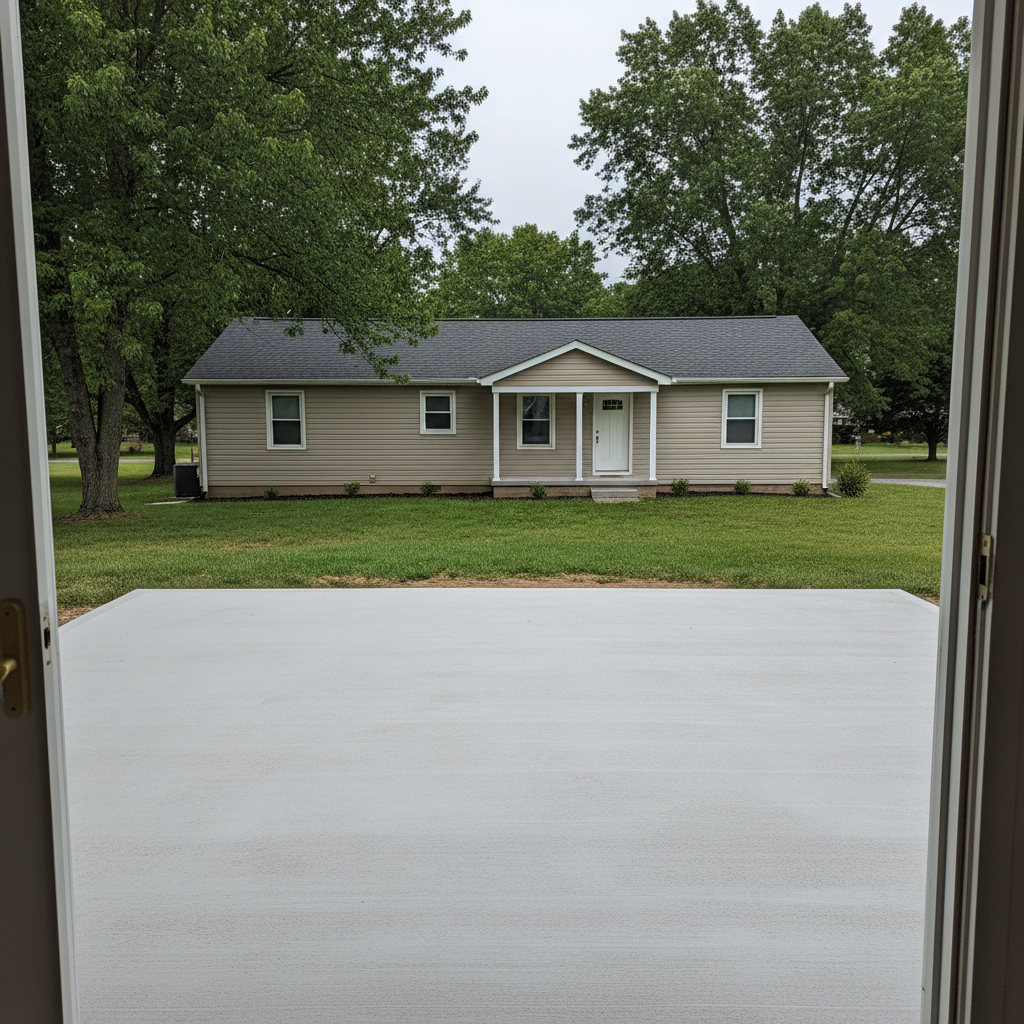
Patios get poured with a slight pitch, usually a quarter inch per foot, so water runs off toward the yard instead of pooling against the house foundation. Finish options range from a basic broom finish to stamped or exposed aggregate, depending on what the budget and the look call for.
Stamped concrete gets color and a pattern worked into the surface while it's still plastic, imitating slate, flagstone or brick without the joints where weeds and ants get in. Timing is everything on a stamped job, there's maybe a thirty minute window before the mix sets too hard to take an impression. Sealing afterward protects the color and texture from UV fading and salt damage.
Not every cracked or sunken slab needs to be torn out. Smaller cracks can sometimes be routed and filled, and a sunken section near a step or garage can often be mudjacked or foam-lifted back to grade instead of replaced. Full replacement gets recommended when the slab is cracked through in multiple places or the base underneath has washed out.
Sidewalk sections get poured with control joints spaced close, usually matching the width of the walk, since a narrow slab cracks more predictably than a wide one. County right-of-way sidewalks sometimes require a permit even for a straight replacement, which gets checked before the quote goes out.
Steps and stoops take a beating from foot traffic and from water running off the roof if there's no gutter overhead, which is usually why they crack or settle first. Rebar reinforcement ties new steps into the existing foundation or porch slab so they don't separate and create a trip hazard a year later.
Garage floor slabs, shed pads and equipment pads all need a vapor barrier under the gravel if there's any chance of moisture coming up from below. Thickness and reinforcement get sized to whatever's sitting on the slab, a riding mower pad doesn't call for the same mix as a slab holding a car lift.
Exposed aggregate gets its texture by washing away the top layer of cement paste before full cure, revealing the stone underneath for a non-slip surface that works well on pool decks and walkways. It costs more than a plain broom finish but holds up well and doesn't show tire marks or scuffs the way a smooth slab does.
An existing driveway or patio that's faded, stained or just showing its age can sometimes be resurfaced with a thin overlay instead of torn out, provided the slab underneath is structurally sound. Color and texture get worked into the overlay, giving an old slab a new look for less than a full replacement.
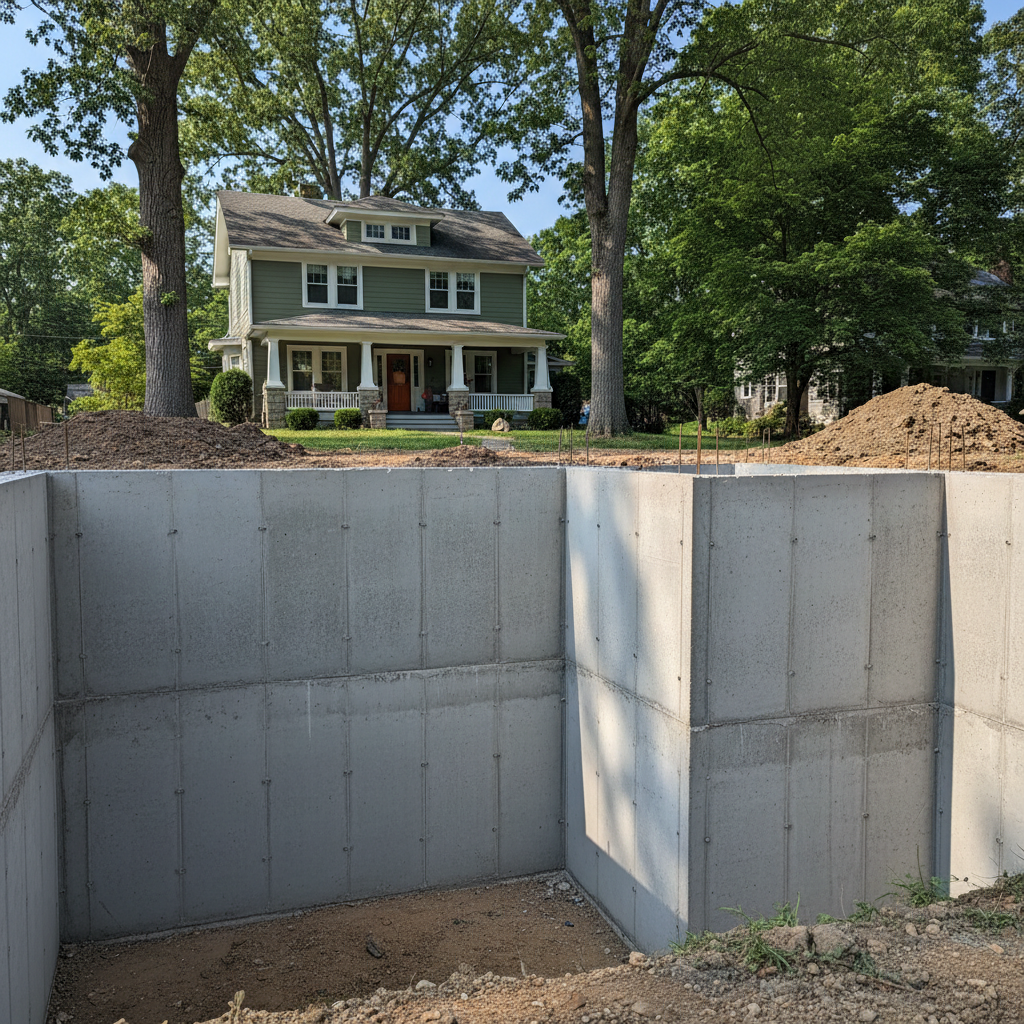
Small retaining walls holding back a sloped yard or a raised bed get built with proper gravel backfill and a drainage pipe behind them, since a wall that traps water against its back face is a wall that eventually leans or fails. Taller walls over about four feet typically call for an engineered design and a permit before anything gets built.
Four steps, and no surprises in any of them.
You tell us what you want doing, we look at what is actually there, and we ask the awkward questions early.
In writing, itemised, free. If something might add cost later we flag it now rather than at the end.
Same crew throughout. We cover your floors, keep the dust down and tidy up before we leave each day.
You point out anything you are not happy with and we fix it before the invoice, not after.
Concrete crews travel throughout this part of Montgomery and Frederick County.
What comes up once a concrete project is actually underway.
Describe the problem and we will tell you what it probably is. No obligation.